
KS3 Geography · Years 7–9
Coastal Processes and Human Impact
How and why does the coastline differ between two study locations, and what does this suggest about its management?
Explore a coastline through a geographical investigation. Pupils compare two study locations, collect field evidence and use their findings to explain coastal patterns and consider management choices.
At a glance
Audience
KS3 Years 7–9; adapted to the class’s prior learning and support needs.
Focus
Coastal processes, comparison and management.
Duration
Up to 4½ hours on site, including lunch and breaks. Timings agreed around school travel.
Location
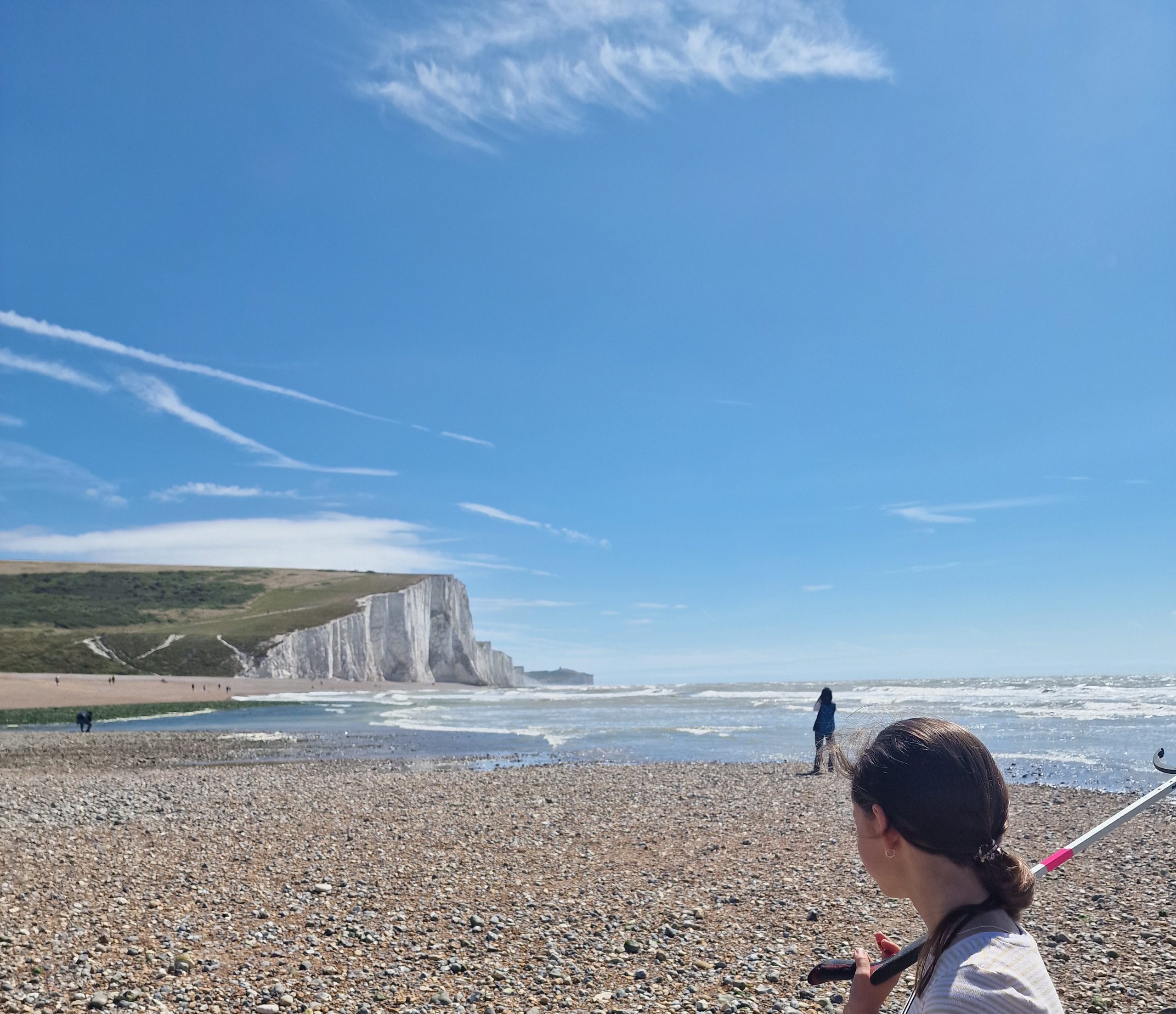
Seven Sisters Country Park or Hastings Country Park, on a coastal route agreed for the comparison.
Format
Standalone field day with free self-led follow-on resources.
Class groups
Up to 30 pupils per class. One Naturebytes educator and activity equipment per fieldwork class; school staff accompany and support pupils.
Price
£250 first class; £200 each additional class on the same visit. Optional indoor hire £60/day additional. Transport separate; total payable and any applicable tax confirmed in the quotation.
What pupils investigate
Step 1
Locate and predict
Use maps and field observations to identify coastal features and predict how two locations might differ.
Step 2
Measure and compare
Collect comparable evidence using a selected coastal fieldwork method. Present the results and identify patterns and differences.
Step 3
Explain and evaluate
Connect field findings with information about the coastline and its management. Explain a judgement and consider what further evidence would strengthen it.
Evidence of learning
Pupils produce an annotated map or sketch, a comparison record and a supported conclusion. They practise explaining both what their evidence shows and what remains uncertain.
Curriculum connections in England
The course supports selected KS3 Geography learning about coasts, interactions between physical processes and human activity, maps and geographical fieldwork. We agree the level of measurement and analysis with your department.
Learning matched to your class
Classes new to coastal fieldwork can use modelled methods and supported recording. More experienced pupils can take greater responsibility for sampling, data presentation and evaluation. Tell us which coastal topics and fieldwork skills your pupils have already studied.
Plan the visit
We agree the study locations, fieldwork methods, equipment, timings and school support before booking. Share your travel limits and general access or learning needs so we can discuss a suitable programme. Your quotation confirms the agreed inclusions and total price.
Each fieldwork class has one Naturebytes educator, prepared activity equipment, field recording materials and essential teacher information. Free self-led follow-on resources are included.
Optional · £250 per class group
Optional follow-on school visit
A Naturebytes educator visits your school to take the learning deeper, helping pupils apply their fieldwork to the school grounds and local area. The visit is £250 per class group. One educator may lead a larger combined group by agreement.
Naturebytes brings technology for one class of up to 30 pupils; agree additional compatible school technology, supporting adults or a suitable rotation beforehand. The format and price are confirmed in your quotation.
Questions teachers ask
Will pupils enter the sea or work below cliffs?
Activities and observation positions are selected for the agreed route and conditions. Water entry and cliff-base access are not assumed parts of this course.
Can it prepare pupils for GCSE fieldwork?
It develops useful enquiry skills, but it is a KS3 course and does not claim to fulfil GCSE fieldwork requirements.
What happens if the conditions change?
We agree weather and site alternatives before booking. If the planned comparison becomes unsuitable, we discuss changes to the programme or date.
Can the timing fit our coach?
The field day lasts up to 4½ hours on site, including lunch and breaks. Share your arrival and departure limits so that we can agree a programme that retains a complete enquiry.
What does the school provide?
Please arrange transport, the agreed accompanying adults and suitable outdoor clothing, footwear, lunch and drinks. School staff accompany the class. Adult roles and pupil support arrangements are agreed before the visit.
Can you adapt the visit?
We discuss the route, recording tasks, pace and support with you. Tell us about general needs at enquiry; detailed pupil information is arranged privately during visit planning.
How much will it cost?
The field day is £250 for the first class of up to 30 pupils, plus £200 for each additional class on the same visit. Optional indoor hire is £60 per day, added separately. Transport is separate. Your quotation confirms the total payable and any applicable tax.
What about larger groups?
Each fieldwork class of up to 30 has an educator and equipment allocation, supported by school staff. We confirm staffing and the timetable before booking.
Can we get funding?
For an eligible visit at Seven Sisters, check the current South Downs Outdoor Learning Grant guidance (opens in a new tab). Applications and awards depend on the scheme’s terms and availability. Follow-on school visits and visits to Hastings are outside this scheme.
Plan your coastal investigation
Tell us your year group, approximate pupil numbers, preferred period and what you want pupils to learn. We will discuss the enquiry, location and quotation with you.